Ghana Political News Roundup: Key Political Stories in Ghana
For G-Family Media | November 28, 2026 — By the G-Family Media Political Desk
For G-Family Media | November 28, 2026 • By the G-Family Media Political Desk
President Mahama calls for stronger Ghana–Barbados relations
President John Dramani Mahama has called for deeper trade, investment and cultural cooperation between Ghana and Barbados during a historic address to the Barbadian Parliament.
The President highlighted the strong historical and cultural connection between Ghana and Barbados, particularly the shared African heritage of both countries. He also pointed to opportunities for stronger cooperation in business, tourism, education, culture and other areas of mutual interest.
President Mahama’s visit forms part of Ghana’s wider diplomatic and economic engagement with the Caribbean. The discussions also come as Ghana prepares its 2027 fiscal strategy, with the government expected to focus on economic growth, investment and international partnerships.
The visit is being viewed as an opportunity to strengthen Ghana’s relationship with Barbados and promote closer ties between Africa and the Caribbean.
Sources: Ghana Business News, MyJoyOnline, Graphic Online.
Civil society groups challenge proposed five-year presidential term
Ghana’s constitutional review process continues to generate debate, with civil society organisations raising concerns about a proposal to extend the presidential term from four years to five years.
Those opposing the proposal argue that any major change to the presidential term must be carefully examined and widely discussed before it is presented to the public. They say constitutional reform should be based on national consensus and should not be treated as a partisan political matter.
Supporters of the proposal may argue that a five-year term could give governments more time to implement policies and complete development projects. However, critics are concerned about the possible effect on democratic accountability, election scheduling and the balance of political power.
The proposal remains under discussion and has not yet become law. Any amendment would have to follow Ghana’s constitutional procedures, including parliamentary approval and, where required, a referendum.
Sources: Graphic Online, JoyNews.
GJA opposes proposed transfer of media board appointments
The Ghana Journalists Association has opposed a proposal to amend Article 168 of the 1992 Constitution.
The proposal would reportedly transfer responsibility for appointing chairpersons and members of governing boards of state-owned media organisations from the National Media Commission to a government ministry or another state institution.
The GJA has warned that such a change could expose state-owned media organisations to increased political influence. The association argues that the current constitutional arrangement is intended to protect editorial independence and prevent direct government control of public media institutions.
The GJA says media independence is important for democracy because journalists must be able to report on government policies, Parliament and public institutions without political pressure. The association is calling for wider consultations before any decision is made on the proposal.
Source: Graphic Online.
GJA calls for transparency in proposed GH₵10 million Media Development Fund
The Ghana Journalists Association is calling for transparency, fairness and accountability in the administration of the proposed GH₵10 million Media Development Fund.
The fund was announced as part of the government’s 2027 Budget Statement and Economic Policy. The GJA has welcomed the allocation but says its success will depend on the rules and institutions established to manage it.
The association wants media organisations, journalists and other relevant stakeholders to be involved in designing the fund’s operating guidelines. It also wants safeguards to ensure that the money is distributed fairly and used for genuine media development.
The GJA says Ghana’s media industry faces serious challenges, including rising operating costs, declining advertising revenue, limited infrastructure and the financial pressure created by digital changes. It has therefore called for the fund to become a long-term support programme rather than a one-time allocation.
The association also warned that political interference must be prevented so that the fund does not become a tool for rewarding media organisations based on political loyalty.
Source: Graphic Online.
ECOWAS calls for stronger regional institutions
The Speaker of the ECOWAS Parliament, Hadja Memounatou Ibrahima, has urged West African countries to strengthen regional institutions and improve cooperation to confront security, economic, political and social challenges.
She said ECOWAS is facing a critical period as terrorism, migration, humanitarian emergencies, climate change and economic pressures continue to affect the sub-region. She stressed that no single country or institution can solve these problems alone.
The ECOWAS Parliament Speaker also called for a stronger and more influential regional Parliament that can contribute to decision-making, improve oversight and ensure that citizens’ concerns are reflected in regional policies.
She linked regional integration to democracy, justice, the rule of law and public confidence. Her comments are particularly relevant to Ghana because the country remains an important member of ECOWAS and has a long-standing interest in regional peace and economic cooperation.
Source: Graphic Online.
Sir Sam Jonah’s Union Government proposal remains part of the political debate
Debate also continues around Sir Sam Jonah’s proposal for a new Union Government arrangement aimed at reducing Ghana’s winner-takes-all political system.
The proposal suggests that the party that wins an election would form the government, while other parties with significant parliamentary representation could receive Cabinet positions. It would require parliamentary approval and a referendum before it could be implemented.
Supporters believe the idea could encourage cooperation and reduce the political tension that often surrounds Ghana’s elections. Critics, however, question whether a unity government could weaken the role of the parliamentary opposition and reduce effective scrutiny of government decisions.
The proposal is not currently part of Ghana’s law. It remains an idea under public and political discussion.
Source: Graphic Online.
G-Family Media Summary
Ghana’s political conversation on November 28, 2026, is centred on diplomacy, constitutional reform, media independence, regional cooperation and possible changes to the country’s political system.
The main issues remain under discussion, and Ghanaians will be watching Parliament, civil society groups, political parties and government institutions for further decisions and consultations.
G-Family Media will continue to follow the developments and provide updates as official information becomes available.
Related Stories
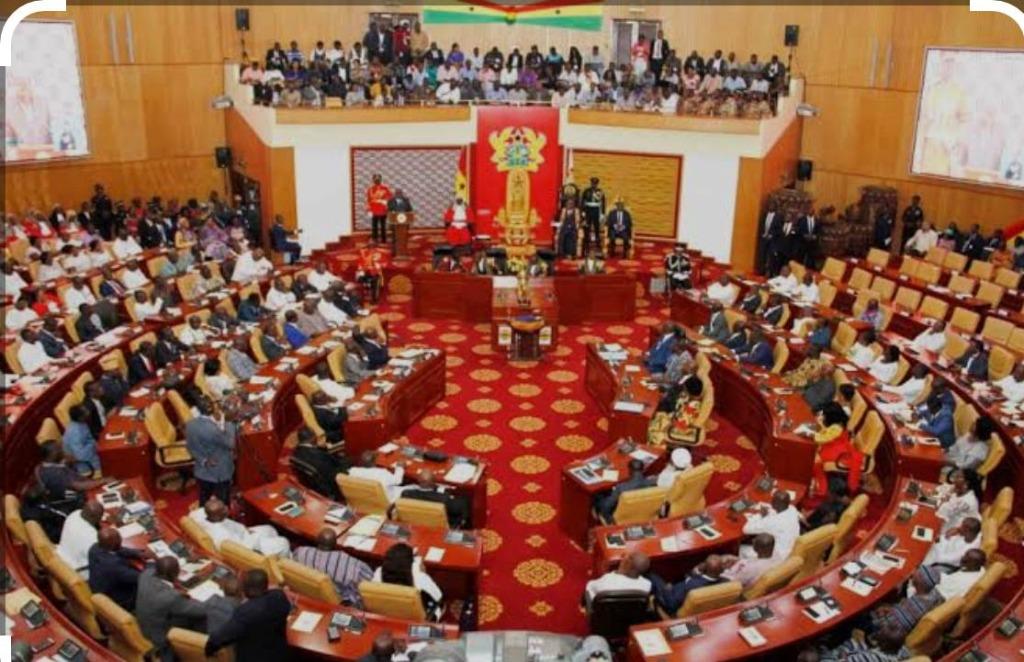
Ghana Political Developments: Power-Sharing Debate, Parliament's Budget and Constitutional Reform
Sir Sam Jonah's Union Government proposal revives power-sharing debate, Speaker Alban Bagbin warns on Parliament's GH¢670m 2027 budget cut, and an 11-member committee advances constitutional review discussions.
Ghana's Political Debate Is Moving Toward Reform, Accountability and Stronger Institutions
From Ghana-Barbados diplomacy and five-year term debates to Article 168 media independence, ECOWAS integration, and Union Government proposals, Ghanaians are demanding accountable and independent institutions.
Stay ahead with G-Family Media
Receive curated Ghanaian news, political analysis, entertainment stories, music updates, and Veterans' Dignity features directly in your inbox.